
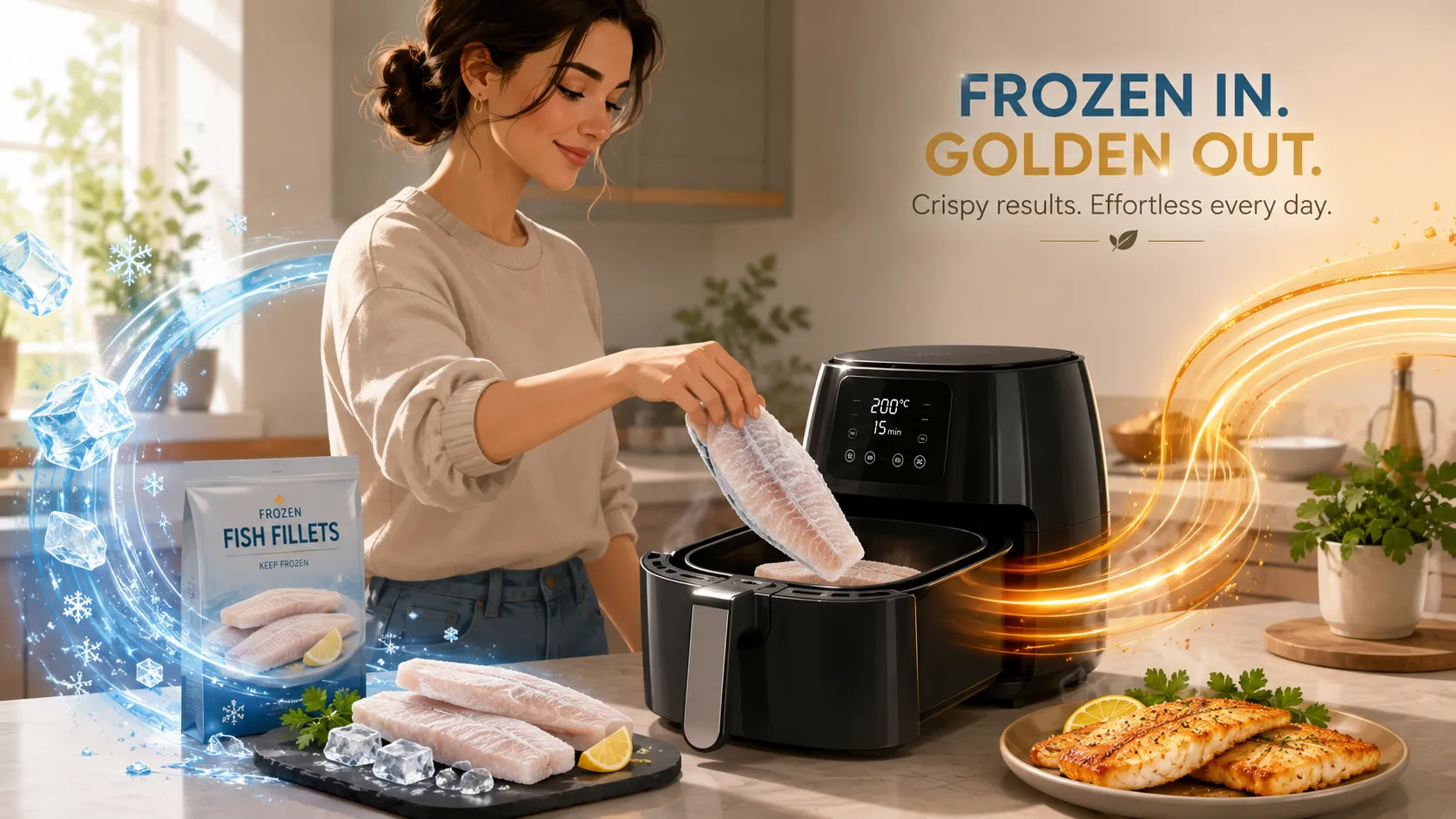
Frozen fish fillets have quietly become one of the most convenient proteins in modern kitchens. They sit patiently in the freezer, ready whenever dinner plans change or time becomes scarce. The challenge, however, has always been turning those frozen fillets into something that tastes fresh, crispy, and satisfying rather than bland or rubbery. That is where the air fryer shines. By using powerful circulating hot air, an air fryer can transform frozen fish into a meal with a golden exterior and tender interior in a surprisingly short amount of time.
Many home cooks used to rely on conventional ovens for frozen fish, but air fryers have changed expectations. Instead of waiting 20 to 30 minutes for a full-size oven to heat up, you can often have perfectly cooked fish on the table in about 10 to 15 minutes. Recent cooking guidance from multiple air fryer experts consistently places frozen fish cooking times within that range, making it one of the fastest seafood options available for busy households. Whether you prefer breaded cod, battered pollock, plain tilapia, or frozen salmon portions, understanding the correct temperature, cooking time, and finishing techniques can make a dramatic difference. This guide covers everything from achieving maximum crispiness to preventing dryness, checking doneness, adding flavor, and selecting side dishes that keep the meal light and balanced.
Why Air Fryers Have Become the Go-To Tool for Frozen Fish
The Science Behind Air Fryer Crispiness
The secret behind air fryer success lies in rapid air circulation. Unlike deep frying, which relies on hot oil, an air fryer creates a convection effect that moves hot air around the food at high speed. This process removes surface moisture quickly, helping create a crisp outer layer while allowing the inside to cook gently. Experts often describe air fryers as compact convection ovens optimized for speed and efficiency. Think of the air fryer as a powerful wind tunnel of heat. When frozen fish enters the basket, the icy exterior immediately begins releasing moisture. Because the circulating air continuously removes that moisture, the surface dries and browns instead of steaming. The result is a texture that resembles traditional frying without requiring large amounts of oil.
This method is especially effective for frozen fish because seafood naturally cooks quickly. The shorter cooking time reduces the likelihood of overcooking while still creating the crisp finish people crave. For busy weeknights, it feels almost magical: frozen fish goes in, and a crispy meal emerges minutes later.
Benefits Compared With Oven Baking
Traditional ovens can certainly cook frozen fish, but they often struggle to create the same level of crispness. The larger cooking chamber means heat takes longer to build and circulate. Air fryers concentrate that heat in a much smaller space, which translates into faster cooking and better browning.
Another major advantage is energy efficiency. Running a small countertop appliance for 12 minutes consumes significantly less energy than preheating and operating a full-size oven. Cleanup is also easier since most air fryer baskets are removable and simple to wash.
Many cooks report that air-fried fish develops a more appealing texture than oven-baked fish, especially when cooking breaded varieties. The crunchy coating remains intact while the fish inside stays flaky and tender. This combination explains why air fryers have become a favorite tool for frozen seafood enthusiasts.
Choosing the Right Frozen Fish Fillets
Popular Types of Frozen Fish
Not all frozen fish fillets behave the same way in an air fryer. White fish varieties such as cod, pollock, haddock, and tilapia are among the most popular choices because of their mild flavor and delicate texture. They cook quickly and pair well with countless seasonings and sauces.
Salmon is another excellent option. Its higher fat content helps it remain moist during cooking, making it slightly more forgiving than lean white fish. Some frozen salmon portions even develop a lightly crisp surface while retaining a rich, buttery interior.
Breaded and battered fish products are specifically designed for convenient cooking. Their coatings respond exceptionally well to the dry heat environment of an air fryer, often becoming crispier than they would in a standard oven. The key is choosing products with quality ingredients and reasonable sodium levels.
What to Look for on the Packaging
When selecting frozen fish, pay attention to thickness, coating type, and ingredient quality. Thick fillets naturally require longer cooking times, while thinner pieces cook more quickly. Knowing this difference helps prevent accidental overcooking.
Look for fish with minimal ice crystals inside the package. Excessive ice can indicate freezer burn or repeated temperature fluctuations during storage. High-quality frozen fish should appear well-sealed and consistently frozen.
Reading cooking instructions can also provide useful starting points, although air fryer times are often shorter than oven recommendations. Use packaging directions as a reference, then adjust based on your specific appliance and preferences.
Preparing Frozen Fish Fillets for Air Frying
Do You Need to Thaw First?
One of the biggest advantages of cooking frozen fish in an air fryer is that thawing is usually unnecessary. Multiple cooking experts recommend placing the fillets directly into the air fryer from frozen. This saves time while maintaining texture and convenience. Cooking from frozen also helps preserve moisture because the fish warms gradually while the exterior develops crispness. Thawing first can sometimes lead to excess surface moisture, which may reduce browning effectiveness.
That said, exceptionally thick fillets may benefit from a slight reduction in temperature during the initial cooking phase. This allows the center to warm evenly before the exterior becomes too dark.
Preheating and Basket Preparation
Preheating remains one of the most overlooked steps in air fryer cooking. A preheated basket helps begin crisping immediately when the fish is added. Many experts recommend preheating for approximately two to five minutes before cooking. Avoid overcrowding the basket. Each fillet should have enough room for air to circulate freely around it. Overlapping pieces can create uneven cooking and soggy spots.
For breaded fish, little or no additional oil is necessary. For unbreaded fish, a very light mist of high-smoke-point oil can enhance browning and improve seasoning adhesion.
Timing and Temperature Tips for Crispy Results
Recommended Temperature Settings
Most frozen fish fillets perform best between 375°F and 400°F (190°C to 204°C). This range balances crisp exterior development with gentle interior cooking. Many tested recipes identify 400°F (200°C) as the sweet spot for frozen breaded fish. Lower temperatures can produce softer coatings, while excessively high temperatures increase the risk of burning before the center cooks completely. The ideal setting depends on thickness and breading style, but 400°F remains an excellent starting point.
Cooking Time Guide by Fillet Thickness
Cooking time is heavily influenced by thickness. Thin fillets often finish in under 10 minutes, while thicker pieces may require up to 15 minutes. Flipping halfway through cooking promotes even browning and helps both sides crisp effectively. Monitoring the fish during the final few minutes is essential. Air fryer performance varies among brands and basket sizes, so flexibility always beats rigid timing.
Quick Reference Table
| Fish Type | Temperature | Cooking Time |
|---|---|---|
| Thin breaded fillets | 400°F | 8–10 min |
| Standard breaded fillets | 400°F | 10–12 min |
| Thick breaded fillets | 400°F | 12–15 min |
| Unbreaded white fish | 375–390°F | 10–12 min |
| Salmon fillets | 375–400°F | 10–14 min |
These ranges align with commonly tested air fryer cooking recommendations.
Breaded vs Unbreaded Fillets: Key Differences
Best Approach for Breaded Fish
Breaded fish is arguably the easiest type to cook in an air fryer. The coating acts like armor, protecting the delicate fish while becoming beautifully crisp. Most frozen breaded products require little intervention beyond flipping midway through cooking.
Avoid adding too much oil. Excess oil can soften the coating and reduce crunch. Instead, let the circulating heat perform the work. The coating naturally browns and crisps as moisture evaporates.
Because breaded products vary by brand, visual inspection becomes important. Look for an evenly golden surface and firm texture. If some areas remain pale, an extra minute or two often resolves the issue.
Best Approach for Unbreaded Fish
Unbreaded fish requires slightly more attention because it lacks the protective coating that helps retain moisture. A light coating of olive oil, avocado oil, or grapeseed oil can improve both flavor and texture. Seasonings adhere better when applied after a light oil mist. Garlic powder, paprika, black pepper, lemon zest, and dried herbs work particularly well.
Since unbreaded fish can dry out more easily, checking doneness early is wise. Think of it as cooking a delicate silk shirt rather than a heavy winter coat. Precision matters.
Preventing Dry Fish While Keeping the Outside Crisp
Common Mistakes That Cause Dryness
The most common mistake is simply cooking too long. Fish continues cooking briefly after removal from the air fryer due to residual heat. Leaving it in the basket until it appears completely finished can push it beyond the ideal texture.
Another mistake is relying solely on timing. Two fillets may look similar but differ significantly in thickness. One could be perfect at ten minutes while the other needs thirteen.
Overcrowding also contributes to poor texture. When air cannot circulate properly, moisture becomes trapped, forcing cooks to extend cooking time. Longer cooking often results in dry fish.
Techniques for Better Moisture Retention
Use a thermometer whenever possible. This eliminates guesswork and allows you to remove the fish at precisely the right moment. Experts consistently recommend checking internal temperature instead of relying solely on appearance. Adding moisture-rich toppings after cooking can also help. Fresh lemon juice, herb butter, yogurt-based sauces, or salsa provide flavor while enhancing perceived juiciness.
For salmon and other fatty fish, leaving the skin on during cooking can help retain moisture and improve structure. Air fryer specialists frequently recommend this approach for thicker fish portions.
How to Check for Doneness Without Overcooking
Internal Temperature Guidelines
Food safety authorities recommend cooking fish to an internal temperature of 145°F (63°C). At this temperature, the flesh becomes opaque and flakes easily with a fork while remaining safe to eat. Insert an instant-read thermometer into the thickest section of the fillet. This provides the most accurate reading and prevents accidental overcooking.
The thermometer approach may seem excessive at first, but it quickly becomes one of the easiest ways to achieve consistently excellent results.
Visual Signs of Perfectly Cooked Fish
Visual cues remain useful, especially if you do not own a thermometer. Properly cooked fish should appear opaque rather than translucent. It should separate into flakes easily when gently pressed with a fork.
The exterior should look lightly golden or crisp, depending on whether the fish is breaded. If the surface is becoming very dark while the interior remains undercooked, reduce temperature slightly and extend cooking time.
Learning these visual indicators is similar to learning when toast is perfectly browned. After a few attempts, recognizing the ideal stage becomes almost automatic.
Flavor Boosts That Take Frozen Fish Beyond Basic
Seasonings, Sauces, and Finishing Touches
Frozen fish does not have to be boring. In fact, the mild flavor of many fish varieties makes them an ideal canvas for creativity. A squeeze of fresh lemon immediately brightens the entire dish. Fresh herbs such as parsley, dill, cilantro, and chives add color and freshness.
For a Mediterranean twist, combine garlic, oregano, lemon zest, and olive oil. If you enjoy bold flavors, Cajun seasoning, smoked paprika, and blackened spice blends create restaurant-style results with minimal effort.
Popular finishing options include:
- Homemade tartar sauce
- Garlic herb butter
- Mango salsa
- Chimichurri
- Greek yogurt dill sauce
- Honey mustard drizzle

Jalen Mercer is a 38-year-old American health writer living in Richmond, Virginia. With years of experience creating educational online content, he specializes in breakfast nutrition, wellness trends, and lifestyle improvement. As an author for healthybreakfast.xyz, he is committed to producing fact-based articles that reflect careful research, practical experience, and a genuine passion for helping readers build healthier routines.