
Have you ever cooked a steak or roast that looked beautiful on the outside but felt like chewing on a rubber band? You’re not alone. Tender meat is one of the most sought-after qualities in cooking, yet many home cooks assume they need a specialized meat mallet to achieve it. The truth is that a mallet is only one of many ways to make meat softer and more enjoyable. Some of the most effective methods involve ingredients and tools already sitting in your kitchen.
Tenderizing meat is both an art and a science. It involves understanding how muscle fibers, collagen, moisture, and cooking techniques interact. Certain cuts practically melt in your mouth with minimal effort, while others require strategic preparation to unlock their full potential. Knowing the difference can save money, improve flavor, and elevate everyday meals.
Recent food science research shows that salt-based brining remains one of the most effective methods for improving moisture retention and tenderness throughout a cut of meat, while enzyme-based tenderizers such as pineapple and papaya can significantly soften surface fibers when used correctly. Studies also demonstrate that combining mechanical and enzymatic methods can reduce meat toughness by as much as 24% in some cuts. Let’s explore exactly how to tenderize meat without a mallet and achieve restaurant-quality results at home.
Understanding Why Meat Becomes Tough
The Role of Muscle Fibers and Connective Tissue
To understand tenderizing, you first need to understand what makes meat tough. Every piece of meat is made up of muscle fibers bundled together by connective tissues. The more a muscle is used during an animal’s life, the more connective tissue it develops. This connective tissue contains collagen, which is largely responsible for toughness.
Think of collagen as nature’s rope. It holds muscles together and provides strength. While that’s great for the animal, it can make dinner less enjoyable if not handled properly. When meat contains high levels of collagen, chewing becomes more difficult because the fibers resist breaking apart.
The challenge becomes even greater when meat is overcooked. High heat can squeeze moisture from muscle fibers, creating a dry, chewy texture. This is why a premium cut can still become tough if cooked incorrectly. Tenderness isn’t just about the cut itself; it’s also about how you prepare and cook it.
Why Different Cuts Have Different Textures
Not all cuts are created equal. Muscles that perform less work, such as those along the back of the animal, remain naturally tender. Muscles used for movement, support, and weight-bearing tend to be tougher because they contain more collagen and stronger fibers.
This explains why a tenderloin costs significantly more than a chuck roast. You’re paying for natural tenderness. However, that doesn’t mean cheaper cuts are inferior. In fact, many tougher cuts develop deeper flavor because they contain more connective tissue and fat.
Understanding these differences allows you to choose the right tenderizing method. A ribeye may need little more than proper seasoning, while brisket demands patience, moisture, and extended cooking time.
Why Some Cuts Need Tenderizing More Than Others
Naturally Tender Cuts
Certain cuts arrive with tenderness built in. These include tenderloin, ribeye, strip steak, and filet mignon. Since these muscles do relatively little work, they contain less connective tissue and fewer dense muscle fibers.
These cuts often benefit more from proper cooking than aggressive tenderization. Over-tenderizing naturally soft meat can actually harm texture, making it mushy rather than succulent. A simple dry brine and proper cooking temperature are usually enough to maximize their potential.
For home cooks, this is good news. It means expensive cuts require less preparation and fewer ingredients. The focus should be on enhancing flavor rather than breaking down fibers.
Tough Cuts That Benefit from Tenderizing
Cuts such as flank steak, skirt steak, chuck roast, brisket, round steak, and shank are another story. These hardworking muscles contain abundant collagen and stronger fiber structures.
Food science research consistently identifies collagen as the primary reason these cuts require additional preparation. Techniques such as salting, marinating, slow cooking, and enzymatic treatment help break down these structures and create a more enjoyable texture. The advantage is cost. Tough cuts are often more affordable and, when prepared correctly, can rival premium cuts in flavor and satisfaction.
Salt as a Powerful Tenderizing Tool
How Dry Brining Works
If there is one tenderizing technique every cook should master, it’s dry brining. This simple process involves coating meat with salt and allowing it to rest before cooking.
Salt initially draws moisture from the surface. That moisture then dissolves the salt, creating a concentrated brine that is gradually reabsorbed by the meat. As sodium ions interact with muscle proteins, the protein structure changes, helping the meat retain more moisture during cooking. The result is meat that remains juicier and often feels more tender. Unlike acidic marinades, salt penetrates much deeper into the meat, influencing texture throughout the cut rather than only at the surface.
Best Timing for Salting Meat
Timing matters. Thin steaks may benefit from one to four hours of dry brining, while larger roasts can benefit from overnight salting. Many experts recommend using approximately 1% salt by weight for optimal results. A common mistake is salting immediately before cooking and expecting deep tenderization. While seasoning improves flavor instantly, structural changes require time. Patience is what transforms salt from a seasoning into a genuine texture-enhancing tool.
Marinades and Their Real Impact
What Acidic Marinades Actually Do
Marinades are among the most misunderstood techniques in cooking. Many people assume acidic ingredients like vinegar, lemon juice, and wine deeply tenderize meat. The reality is more nuanced.
Research indicates that acidic marinades primarily affect only the outer few millimeters of meat. They denature proteins near the surface but do not significantly penetrate thick cuts. In many cases, acid contributes more flavor than actual deep tenderization. This doesn’t make marinades useless. Quite the opposite. They add complexity, aroma, and a pleasant surface texture. The key is understanding their limitations.
Common Marinade Mistakes
One of the biggest mistakes is marinating for too long. Excessive exposure to strong acids can create a mushy outer layer while leaving the interior unchanged. Research suggests that extending acidic marinades beyond effective time windows often damages texture rather than improving it. Another mistake is expecting marinades to fix extremely tough cuts. If a cut contains large amounts of collagen, slow cooking remains a more effective strategy than simply soaking it in acid.
| Marinade Ingredient | Main Effect | Tenderizing Depth |
|---|---|---|
| Lemon Juice | Surface protein breakdown | Shallow |
| Vinegar | Surface softening | Shallow |
| Yogurt | Gentle protein denaturing | Moderate surface |
| Soy Sauce | Flavor and salt penetration | Moderate |
| Salt Brine | Moisture retention and texture improvement | Deep |
Natural Tenderizers Explained
Pineapple, Papaya, and Kiwi
Nature offers some remarkably powerful tenderizers. Pineapple contains bromelain, papaya contains papain, and kiwi contains actinidin. These enzymes actively break down proteins responsible for toughness. Fresh pineapple is particularly effective. Research shows pineapple-based treatments can significantly reduce meat toughness compared to untreated samples. These natural options are especially useful when preparing thinner cuts destined for quick cooking methods. A brief treatment can noticeably improve tenderness without requiring special equipment.
When Natural Enzymes Go Too Far
The power of enzymes is both a strength and a weakness. Leave meat in fresh pineapple or papaya for too long, and the proteins can break down excessively. The result is an unpleasant mushy texture rather than tender meat. Most food scientists recommend relatively short exposure times, often between 15 and 45 minutes for thinner cuts. Fresh fruit works best because heat processing during canning destroys many active enzymes. Like a sharp knife, enzyme tenderizers are incredibly useful when used carefully.
How Proper Slicing Changes Meat Texture
Understanding Grain Direction
One of the simplest tenderizing tricks costs nothing and requires no preparation time. It’s all about slicing.
Every cut of meat contains visible muscle fibers running in a specific direction. This direction is known as the grain. If you cut parallel to these fibers, each bite contains long strands that require more chewing.
Imagine biting through a bundle of ropes. Long ropes are difficult to chew. Short ropes break apart easily.
The Science of Slicing Against the Grain
Cutting against the grain shortens muscle fibers dramatically. This mechanical reduction changes how the meat feels in your mouth, even though the actual composition remains unchanged.
Flank steak provides a perfect example. When sliced incorrectly, it can feel extremely tough. When sliced thinly across the grain, it becomes noticeably more tender.
Professional chefs often rely on slicing technique as much as any marinade or seasoning. In many cases, proper slicing can compensate for cuts that would otherwise seem disappointingly chewy.
Slow Cooking Methods That Break Down Tough Fibers
Braising and Stewing
Few methods rival slow cooking when it comes to transforming tough meat. Low temperatures and extended cooking times gradually convert collagen into gelatin. This process creates a silky texture and rich mouthfeel. Braising combines dry and moist heat. The meat is typically seared first, then cooked slowly in liquid. This method is ideal for chuck roast, brisket, and short ribs.
Stewing follows a similar principle but uses smaller pieces submerged in liquid. Both techniques allow collagen-rich cuts to become fork-tender without drying out.
Slow Roasting and Low-Temperature Cooking
Low-temperature roasting achieves similar results. Whether using an oven, smoker, or slow cooker, the goal remains consistent: provide enough time for connective tissues to dissolve gradually.
Many experienced cooks describe slow cooking as turning tough fibers into edible butter. It’s an apt comparison. The transformation can seem almost magical, yet it’s entirely rooted in food science and collagen breakdown.
Common Kitchen Tools That Can Help in a Pinch
Forks, Rolling Pins, and Heavy Pans
No meat mallet? No problem.
Several everyday kitchen items can assist with tenderization:
- A fork can create small punctures in thinner cuts.
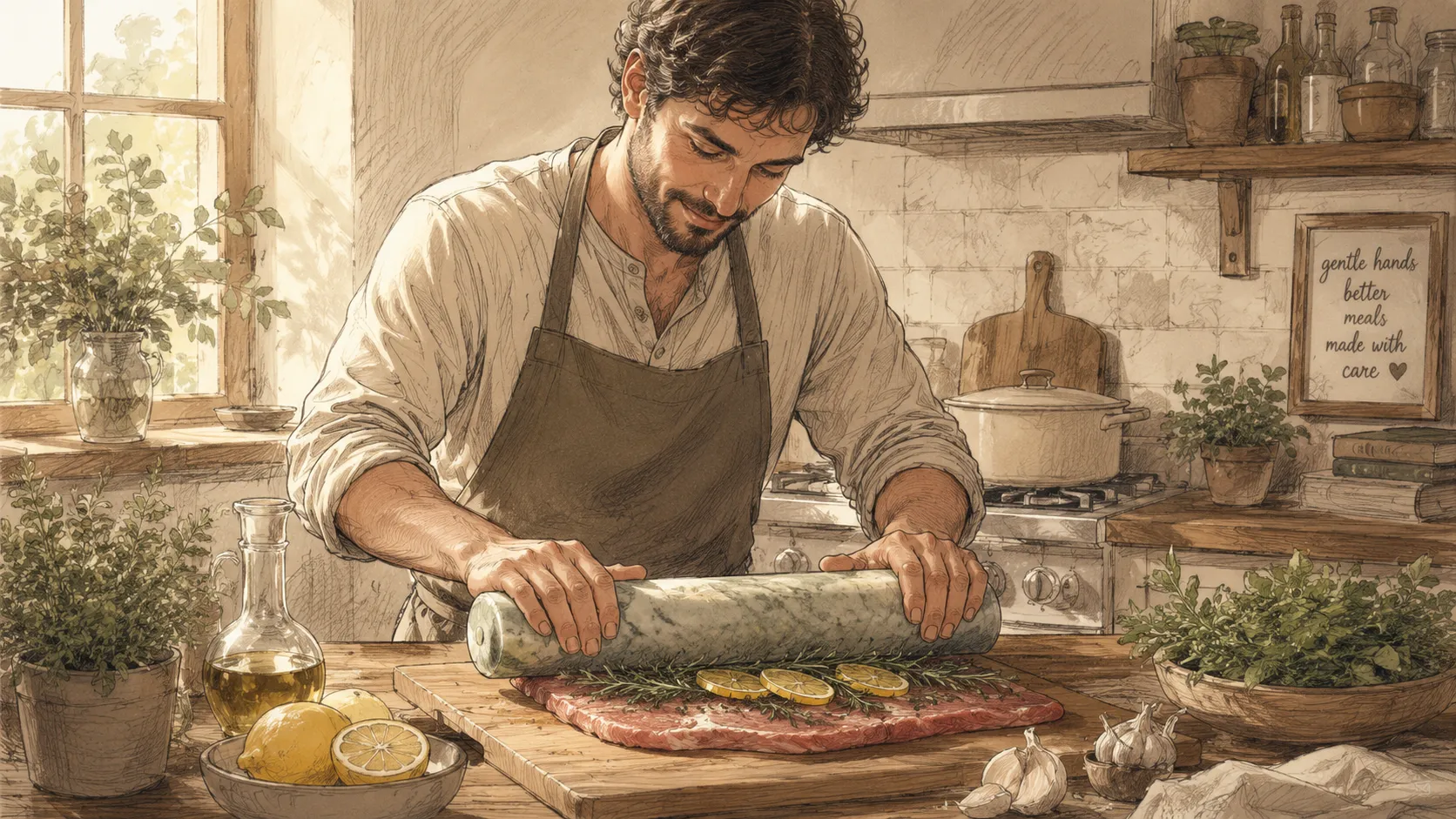
- A rolling pin can gently flatten meat.
- A heavy skillet or frying pan can substitute for a mallet.
- A sharp knife can score surfaces to improve marinade contact.

Colby Renwick is a 27-year-old American blogger from Madison, Wisconsin, specializing in healthy eating, meal planning, and food education. His writing combines careful research with approachable advice, making complex health topics easier to understand. Through his work for healthybreakfast.xyz, he publishes accurate, reader-friendly articles designed to support long-term healthy habits with credibility and consistency.