
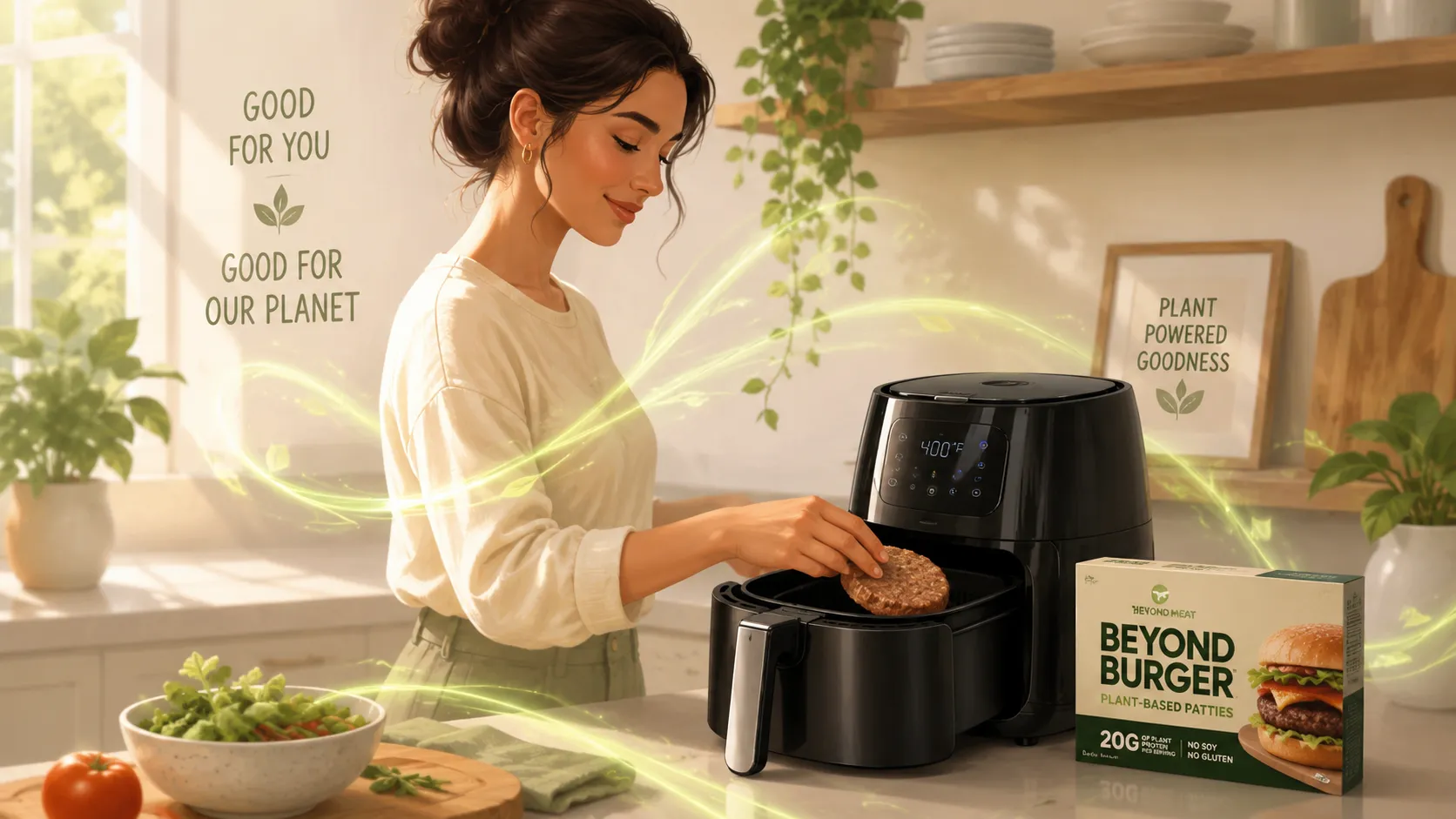
The air fryer has completely changed the way people prepare quick meals, and Beyond Burgers are among the foods that benefit the most from this cooking method. If you’ve ever struggled with plant-based patties sticking to a pan, cooking unevenly, or turning out dry, the air fryer can solve many of those problems. By circulating hot air around the burger, it creates a crisp exterior while helping the inside remain juicy and tender.
Many home cooks choose Beyond Burgers because they deliver a meat-like experience without using animal products. The challenge is that plant-based patties require slightly different cooking techniques than traditional beef burgers. Timing, temperature, and preparation all play a major role in the final texture. Get any one of those factors wrong, and the burger can become dry or overly soft.
Recent air fryer cooking guides consistently recommend temperatures between 350°F and 380°F (180°C–193°C), with most frozen Beyond Burgers cooking in approximately 10 to 12 minutes while being flipped halfway through. Internal temperatures of around 165°F (74°C) are commonly recommended for the best texture and consistency. The good news is that mastering Beyond Burgers in an air fryer isn’t complicated. Once you understand a few key principles, you can create restaurant-quality burgers in less time than it takes to preheat an oven.
Why Air Fryers Work So Well for Beyond Burgers
Benefits of Air Frying Plant-Based Patties
Air fryers work like miniature convection ovens. Instead of relying on direct contact with a hot skillet, they circulate heated air around the food. This creates even cooking from multiple directions and helps develop a lightly crisp outer layer.
One of the biggest advantages for Beyond Burgers is moisture retention. Plant-based patties contain oils and proteins that react differently than beef. When cooked correctly, the circulating heat allows the burger to brown nicely without forcing too much moisture out of the patty. The result is a burger that feels substantial and juicy rather than dry and crumbly.
Another advantage is convenience. There is no need to stand over a stove monitoring splatter or worrying about sticking. Place the patties in the basket, set the temperature, flip halfway through cooking, and let the appliance do the work. This simplicity makes air frying especially appealing for busy weeknights when time is limited.
Cleanup is also significantly easier. Since excess oil drips into the tray below the basket, the burger doesn’t sit in grease while cooking. This helps maintain a cleaner texture and prevents the burger from becoming overly oily.
Texture Differences Compared to Pan Frying
Texture is where many people notice the biggest difference. A skillet creates intense surface contact that can generate a deep crust. An air fryer, meanwhile, develops a lighter, more evenly distributed crispness.
Think of it like the difference between baking bread in a stone oven and toasting it in a convection oven. Both methods produce delicious results, but the textures vary slightly. Air-fried Beyond Burgers often have a more uniform exterior and a softer center.
For many home cooks, this balance is actually preferable. The patty remains tender inside while developing enough browning outside to create satisfying contrast in every bite. With proper technique, the result is remarkably close to a grilled burger experience.
Preparing Plant-Based Patties for Better Texture
Fresh vs Frozen Beyond Burgers
Preparation begins before the burger even enters the air fryer. One of the most common questions is whether Beyond Burgers should be thawed first.
The answer depends on your priorities. Frozen patties offer convenience and consistency. They can go directly into the air fryer and often cook beautifully without any thawing. Several air fryer recipes recommend cooking frozen Beyond Burgers at approximately 375°F for 10–12 minutes while flipping halfway through. Thawed burgers, however, often develop a slightly better crust because less energy is spent warming the frozen center. The outside begins browning sooner, which can improve texture and appearance.
If you’re planning a meal ahead of time, thawing in the refrigerator can provide a small quality advantage. If convenience is your goal, cooking directly from frozen remains an excellent option.
Common Preparation Mistakes to Avoid
Many texture problems originate before cooking begins. Overcrowding the air fryer basket is perhaps the most common mistake. Air fryers rely on unrestricted airflow. When patties touch or overlap, hot air cannot circulate properly, resulting in uneven cooking.
Skipping preheating is another frequent issue. A properly heated basket helps create immediate surface browning. Without preheating, the burger spends extra time slowly warming up, which can negatively affect texture.
Avoid excessive oil as well. Beyond Burgers already contain fats that help maintain moisture. A very light coating may enhance browning, but too much oil can make the burger greasy rather than crispy.
The Ideal Temperature for Even Cooking
Recommended Air Fryer Temperature Settings
Temperature control is one of the most important aspects of successful air frying. Based on multiple cooking guides, the sweet spot generally falls between 350°F and 380°F (180°C–193°C).
| Temperature | Result |
|---|---|
| 350°F (180°C) | Gentle cooking with good moisture retention |
| 375°F (190°C) | Balanced browning and juiciness |
| 380°F (193°C) | Enhanced crust formation |
| 400°F (204°C) | Fast cooking but higher risk of dryness |
For most air fryers, 375°F offers the best balance. It cooks the center thoroughly while producing appealing browning on the exterior.
Why Temperature Matters for Plant-Based Meat
Plant-based proteins react differently than animal proteins. Excessively high temperatures can dry the outer layers before the center reaches its ideal texture. Lower temperatures, on the other hand, may fail to create enough browning.
Imagine baking cookies. Too much heat burns the edges before the center finishes baking. Too little heat leaves them pale and underdeveloped. Beyond Burgers behave similarly. The right temperature encourages caramelization on the outside while preserving moisture within.
Finding this balance is the secret to creating burgers that satisfy both visually and texturally.
How Long to Cook Without Drying the Burger Out
Cooking Times for Refrigerated Patties
Refrigerated Beyond Burgers typically require less time than frozen versions. Most air fryers can cook a thawed patty in approximately 8 to 10 minutes, depending on thickness and model.
The best approach is to flip the burger halfway through cooking. This ensures both sides receive equal exposure to circulating heat. The result is more consistent browning and a better overall appearance.
Monitoring the burger closely during the final few minutes is worthwhile. Air fryer performance varies significantly among brands. What takes eight minutes in one appliance may require ten in another.
Cooking Times for Frozen Patties
Frozen Beyond Burgers generally require 10 to 12 minutes at approximately 375°F, with a flip around the halfway mark. This timing appears consistently across multiple air fryer cooking references. The biggest cause of dryness is overcooking. Once the burger reaches its target internal temperature, remove it promptly. Leaving it in the air fryer “just to be safe” often leads to moisture loss.
Allowing the burger to rest for a couple of minutes after cooking can also improve juiciness. This brief resting period helps redistribute moisture throughout the patty.
Tips for Getting a Better Crust in the Air Fryer
Preheating the Air Fryer
Preheating may seem like a small detail, but it can dramatically improve results. A hot cooking environment immediately begins browning the surface rather than slowly warming the patty.
Most air fryers only require a few minutes of preheating. That small investment of time often translates into noticeably better texture and appearance.
A preheated basket also reduces the likelihood of sticking and helps create more consistent cooking from edge to edge.
Flipping Techniques for Better Browning
Flipping is essential because the top and bottom surfaces receive airflow differently during cooking. Turning the burger halfway through ensures both sides develop similar color and texture.
For even better crust development, some cooks lightly spray the burger with oil before cooking. A minimal amount can enhance browning without making the burger greasy. Air fryer specialists frequently note that a light oil coating may contribute to crispier edges and improved surface texture. Avoid pressing the burger with a spatula. Just as with traditional burgers, pressing forces moisture out and reduces juiciness.
Frozen vs Thawed Beyond Burgers Compared
Texture and Flavor Differences
Both methods have clear strengths. Frozen patties are convenient and produce reliable results. They also allow spontaneous meal preparation without advance planning.
Thawed patties generally offer slightly superior texture. Since the center is already at refrigerator temperature, the burger can focus on browning rather than defrosting. This often creates a more developed crust and a richer eating experience.
Flavor differences are relatively subtle. Most people would struggle to distinguish between the two methods in a blind taste test, especially once toppings are added.
Which Option Delivers Better Results?
For pure convenience, frozen patties win. They cook quickly, require minimal preparation, and still achieve excellent texture.
For maximum quality, thawed patties have a slight edge. They tend to brown more evenly and develop a firmer exterior.
The decision ultimately depends on your schedule. If you’re planning ahead, thawing is worthwhile. If you’re hungry and want dinner fast, cooking directly from frozen works exceptionally well.
Flavor Pairings and Topping Ideas That Work Well
Classic Burger Combinations
The beauty of Beyond Burgers lies in their versatility. Traditional toppings remain popular because they complement the burger’s savory profile without overpowering it.
Some dependable combinations include:
- Lettuce, tomato, onion, and pickle
- Vegan cheddar and caramelized onions
- Mustard, ketchup, and sliced dill pickles
- Grilled mushrooms and Swiss-style plant-based cheese

Dorian Kessler is a 34-year-old American content writer based in Spokane, Washington. He has spent more than a decade researching nutrition, healthy lifestyles, and evidence-based wellness topics while producing informative articles for digital publications. As a regular contributor to healthybreakfast.xyz, he focuses on creating practical, trustworthy content backed by reliable sources and real-world experience, helping readers make informed daily health decisions.