
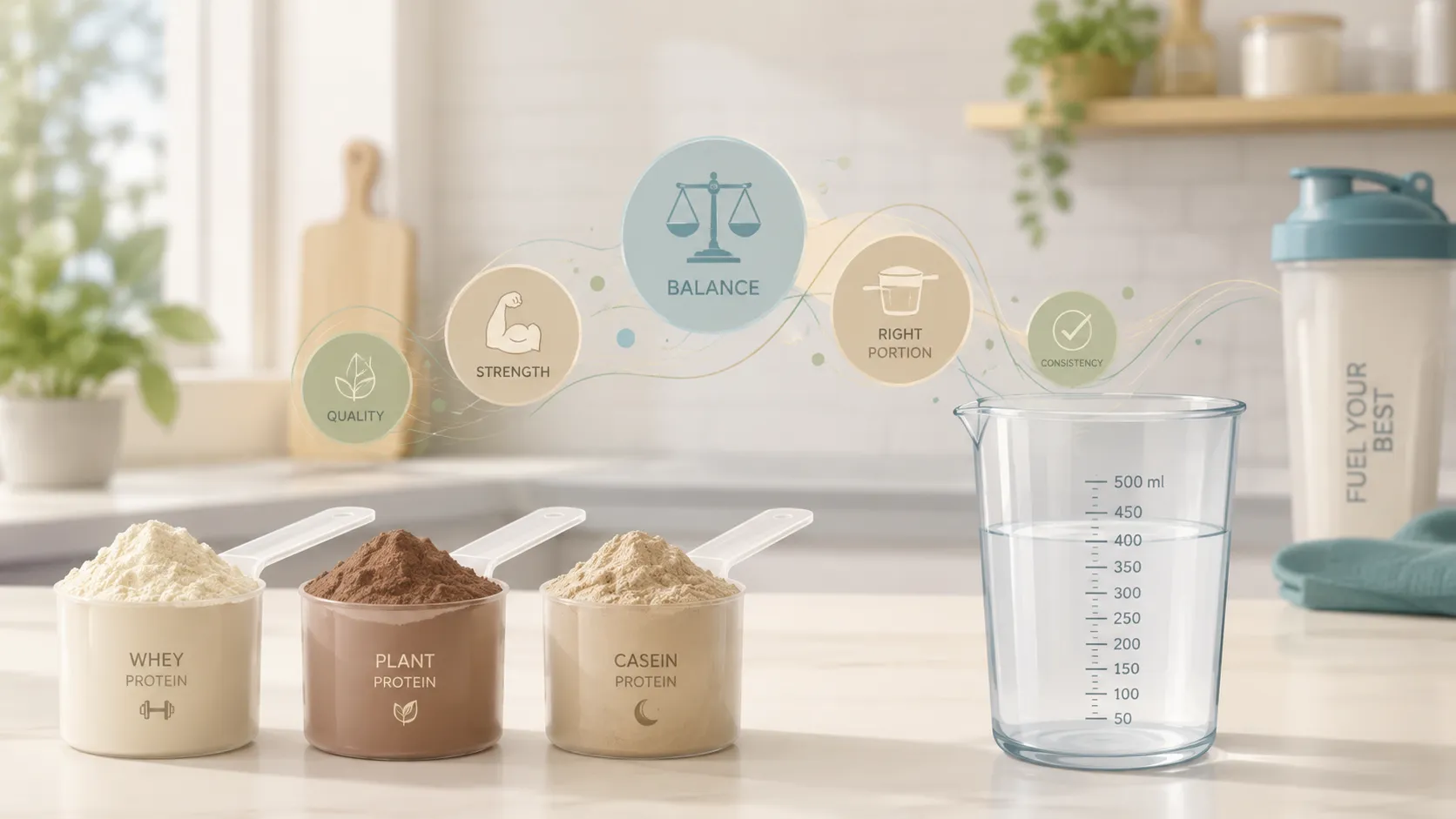
Even experienced users often make small errors when measuring protein powder. These mistakes can significantly affect calorie and protein intake over time.
Some of the most common include:
Packing the Scoop Too Tightly
Pressing the scoop into the powder compresses it, increasing the actual amount well above the intended serving.
Using Heaping Scoops
Many people naturally fill scoops above the rim, adding 20–50% more powder than the label recommends.
Assuming All Scoops Are Identical
Switching brands without checking serving sizes often leads to under- or over-measuring.
Estimating Without Measuring
Pouring powder directly into a shaker bottle without using the provided scoop or scale makes portion sizes inconsistent.
Ignoring Settling
Protein powder can become compacted during shipping or storage, changing how much fits into a scoop.
How Much Protein Most People Actually Need
While fitness enthusiasts often focus on scoop counts, daily protein requirements depend on body weight, activity level, and health goals.
General guidelines include:
- Sedentary adults typically need around 0.8 grams of protein per kilogram of body weight.
- Recreational exercisers often benefit from 1.2 to 1.6 grams per kilogram.
- Strength athletes or individuals building muscle may consume between 1.6 and 2.2 grams per kilogram.
Protein powder is simply a supplement designed to help meet these targets when whole foods alone are not sufficient. It should complement a balanced diet rather than replace nutritious meals.
Smoothie and Recipe Adjustments for Better Consistency
When making smoothies, pancakes, oatmeal, or baked goods, adding too much protein powder can negatively affect texture and taste.
To achieve better consistency:
- Start with one scoop before increasing.
- Add extra liquid if the mixture becomes too thick.
- Blend fruits or yogurt to improve creaminess.
- Balance protein with healthy fats and carbohydrates.
- For baking, avoid replacing too much flour with protein powder unless the recipe is specifically designed for it.
These small adjustments create smoother drinks and more enjoyable recipes without sacrificing nutrition.
The Easiest Way to Avoid Overusing Protein Powder
The simplest way to avoid using too much protein powder is to rely on the serving size printed on the product label and verify it with a kitchen scale whenever possible.
Rather than asking how many scoops fit into a cup, focus on the manufacturer’s recommended serving weight. This approach eliminates confusion caused by different scoop sizes and powder densities.
If you regularly prepare large batches or recipes, measure ingredients carefully before mixing. Consistent portions help you stay aligned with your nutrition goals, avoid unnecessary calories, and make your protein supply last longer.
Final Thoughts
There is no universal answer to how many scoops of protein powder are in a cup because scoop sizes, powder density, and brand formulations vary widely. In many cases, a cup may contain anywhere from three to six scoops depending on the product.
For the most accurate results, always read the nutrition label, use the included scoop as intended, and consider measuring by weight with a digital scale. Doing so ensures you get the protein you expect while maintaining consistency in shakes, recipes, and daily nutrition planning.

Jalen Mercer is a 38-year-old American health writer living in Richmond, Virginia. With years of experience creating educational online content, he specializes in breakfast nutrition, wellness trends, and lifestyle improvement. As an author for healthybreakfast.xyz, he is committed to producing fact-based articles that reflect careful research, practical experience, and a genuine passion for helping readers build healthier routines.